
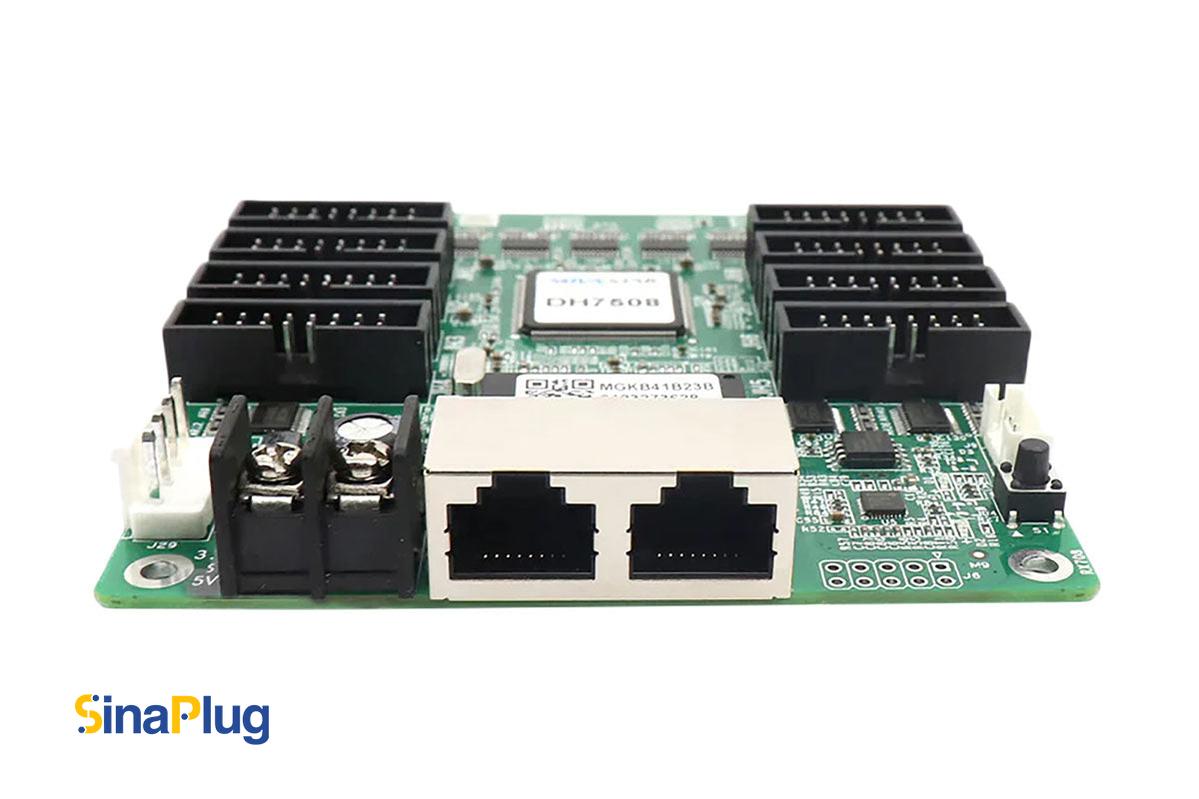
LED displays rely on small parts that do big jobs. Some of these parts are easy to overlook until something goes wrong. Others, like receiving cards, sit at the heart of the system and quietly run the show.
If a receiving card struggles, the display struggles. If the card is reliable, the whole screen becomes stable, bright, and consistent.
At Azar Pixel, we work with these cards every day. We install them. We repair them. We test them and we help customers choose the right one for their LED projects.
Two models that come up often in conversations are the Novastar MRV336 and the Novastar DH7508.
Both can power impressive LED setups.
Both offer stability and performance.
But they were built with different intentions, and each shines in its own way. We will look at how they work, how they are different, and why you might like one more than the other in this study. Let’s dive in.
Novastar MRV336: Built for Modern LED Projects
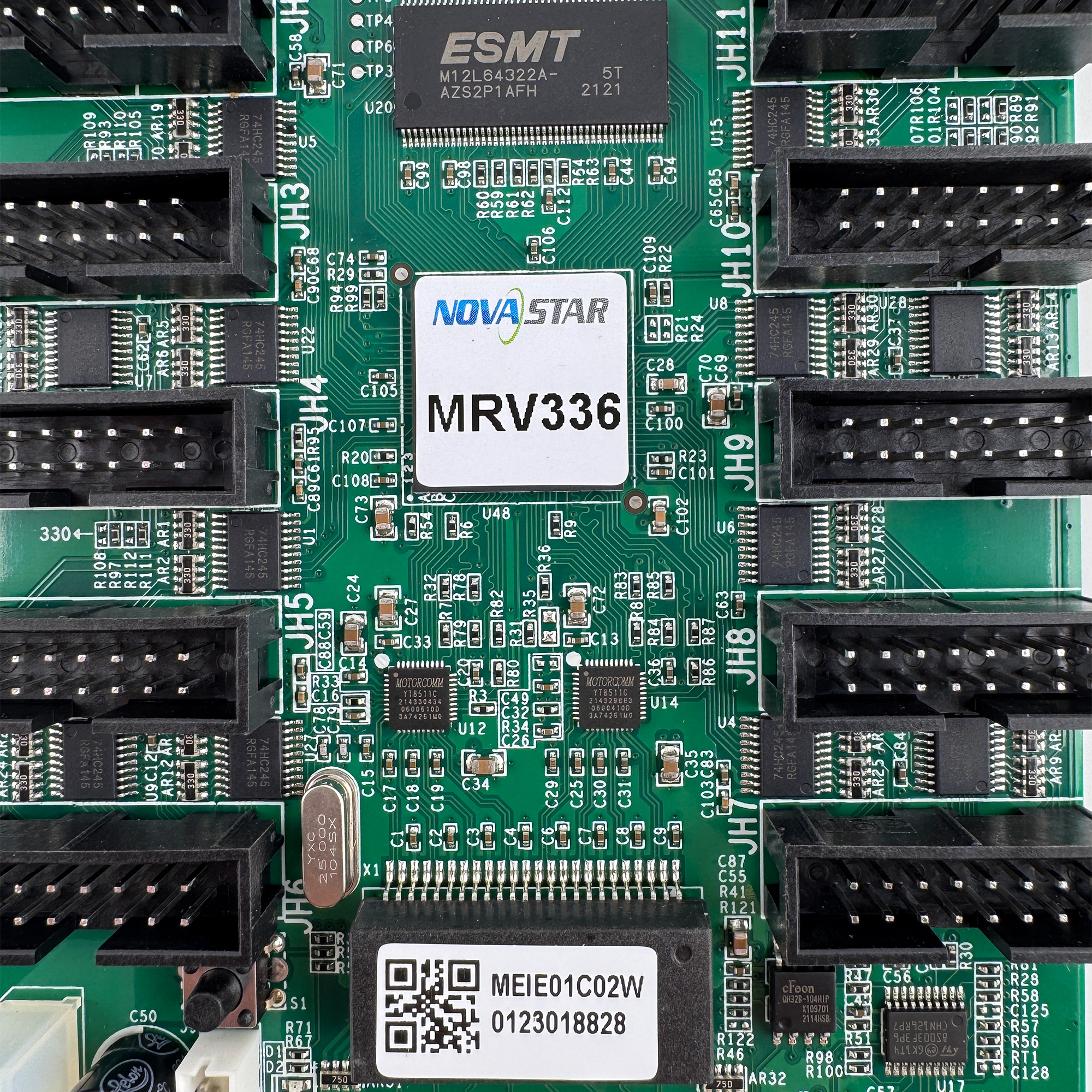
The Novastar MRV336 has become a customer favorite for a simple reason: it just works. It’s one of those cards that delivers stable performance in demanding environments without adding complexity.
This receiving card supports resolutions up to 256×256 @ 60Hz, which is ideal for many indoor and outdoor LED module configurations but what makes the MRV336 stand out is its color and brightness consistency.
With pixel-level brightness and chroma calibration, it keeps your display uniform, no bright patches, no washed-out sections, and no random color differences.
The card features 12 HUB75E connectors, ensuring reliable connectivity and accommodating up to 24 parallel RGB data groups.
That means dependable data flow and smoother performance on larger LED setups. The MRV336 meets EMC Class B guidelines and is RoHS certified, which means it works safely and responsibly with the environment.
Its construction is strong and effective, and it works reliably from -20°C to +70°C. The device requires 2.5 watts from 3.8V to 5.5V DC. Though powerful, it uses little power.
Other valuable features include:
- Temperature monitoring
- Ethernet communication status checks
- Power supply voltage monitoring
- Pre-saved screen settings
- Configuration parameter readback
These features make the MRV336 an excellent option for customers who want a modern receiving card with advanced calibration tools and rock-solid stability.
Novastar DH7508: A Reliable Classic with 3D Support
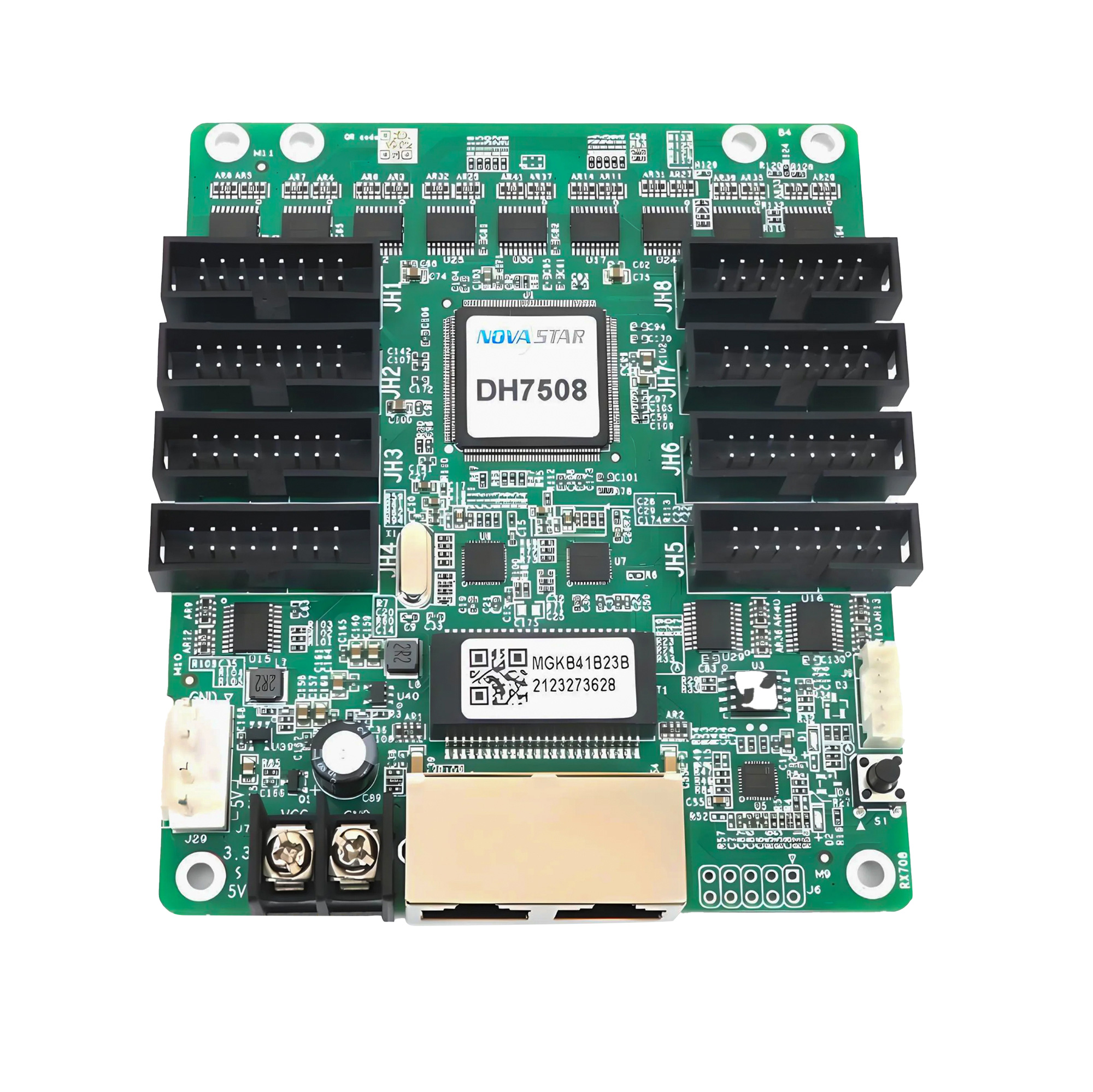
The Novastar DH7508 is another popular receiving card for older and mid-generation LED panels.
Commercial uses, shop displays, outdoor signs, public information panels, and chain store installations use it extensively.
Although production of the DH7508 has been discontinued, it remains popular due to its wide compatibility and stable performance.
For customers who rely on it, Azar Pixel supplies its updated alternatives:
DH7508-S and MRV208-1, both designed as modern replacements. Like the MRV336, the DH7508 also supports resolutions up to 256×256 pixels, but it offers something the MRV336 does not: 3D support.
For applications that use alternating frames or require 3D display functions, this feature can be valuable. The DH7508 runs on 3.3V – 5.5V DC with 2.5W power consumption and performs reliably in temperatures from -20°C to +70°C.
It meets RoHS and EMC Class A standards for safety and compatibility.
Hardware-wise, it offers:
- 8 HUB75E interfaces
- Support for 16 sets of RGB parallel data
- One Gigabit Ethernet port for the in and one for the out
The DH7508’s design makes it perfect for cascading setups or bigger LED screens, especially since it can still work with older setups.
Visit Our Product
NovaStar DH7508 Receiving Card (replace models are DH7508-S and MRV208-1)
$27.00
View Product →
MRV336 vs. DH7508: What’s the Difference?
Both cards are reliable. Both can handle medium-resolution LED panels and both are proven in real-world environments.
But here’s how they truly differ:
1. Connectivity
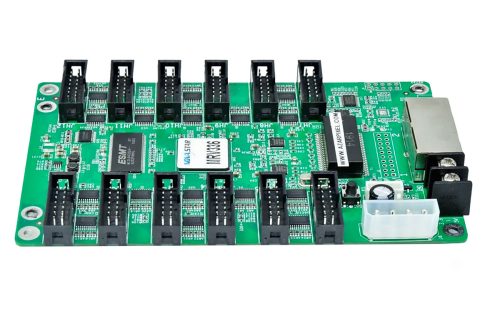
- MRV336 has 12 HUB75E ports.
- DH7508 has 8 HUB75E ports.
The MRV336 has more outlets than the MRV325 so wiring and module layout can be done in more ways.
2. Data Handling
- It can handle up to 24 groups of RGB data at the same time.
- DH7508: up to 16 teams
Once more, the MRV336 can handle more data lines, which makes it better for LED cabinets with a lot of moving parts.
3. Compatibility and Age
- MRV336: current production model
- DH7508: discontinued, now replaced by DH7508-S and MRV208-1
If you’re building a new system, MRV336 is usually the better choice.
4. Extra Features
- MRV336: advanced calibration, monitoring, pre-saved settings
- DH7508: 3D functionality
If your application needs 3D, DH7508 wins that category.
5. Power, Voltage, and Temperature
Both cards are similar in these areas, and both operate efficiently in hot, cold, or difficult environments.
Which One Should You Choose?
If you want a modern card with stronger support, more outputs, better calibration, and long-term availability, choose the Novastar MRV336.
It’s ideal for:
- New LED cabinets
- Large indoor screens
- Outdoor advertising displays
- High-uniformity applications
- Installations requiring pixel-level calibration
If you’re maintaining an older display, replacing a failed card, or working with a system originally designed for the DH series, then Novastar DH7508 or its replacements (DH7508-S or MRV208-1) are the way to go.
Azar Pixel supplies all of these models and can help you choose based on your exact setup.
Final Thoughts: Get Expert Help for Your LED System
Choosing the right receiving card matters.
It affects brightness.
It affects color.
It affects stability and long-term performance.
And with options like the Novastar MRV336 and Novastar DH7508, the choice depends on your system’s needs and future plans. At Azar Pixel, we’re here to guide you through that choice, and make sure your display runs smoothly and reliably.
Need help selecting or replacing your Novastar receiving card? Contact Azar Pixel today.
Let our technicians help you keep your LED display sharp, stable, and ready for any project.




2 thoughts on “Novastar MRV336 & Novastar DH7508 Processors: Comparison Study”
Hey! Thank you for this informative post! Recently I faced a problem with my NovaStar card. My LED cabinet not receiving data after replacing the Novastar receiving card. What do you guys suggest?
Hi Jamie, Please be aware that these products come without any configuration installed. In order for them to work properly you will need to upload the correct configuration file that was supplied by your LED seller. If you do not have this file you can also export it from your previous Receving card.